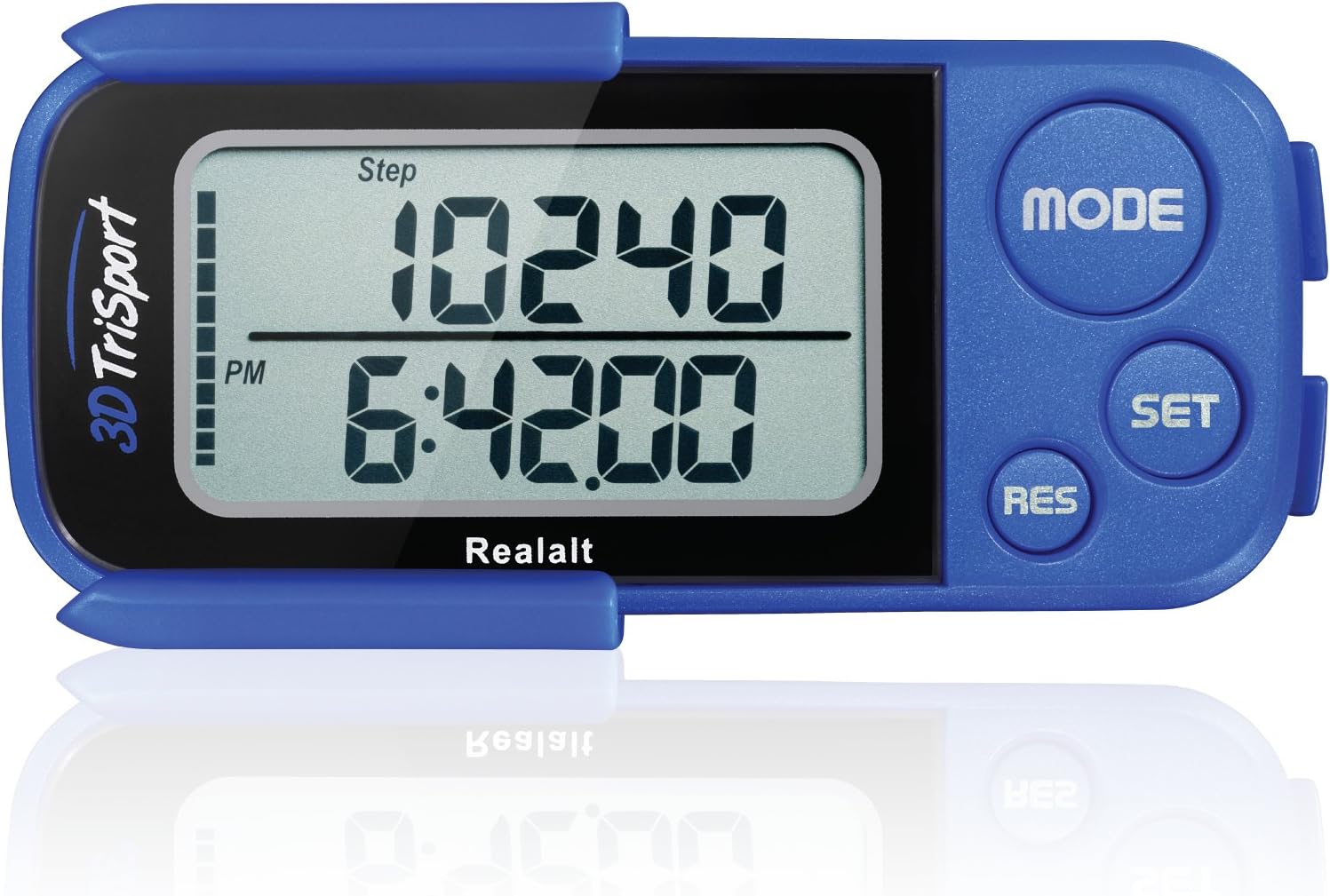
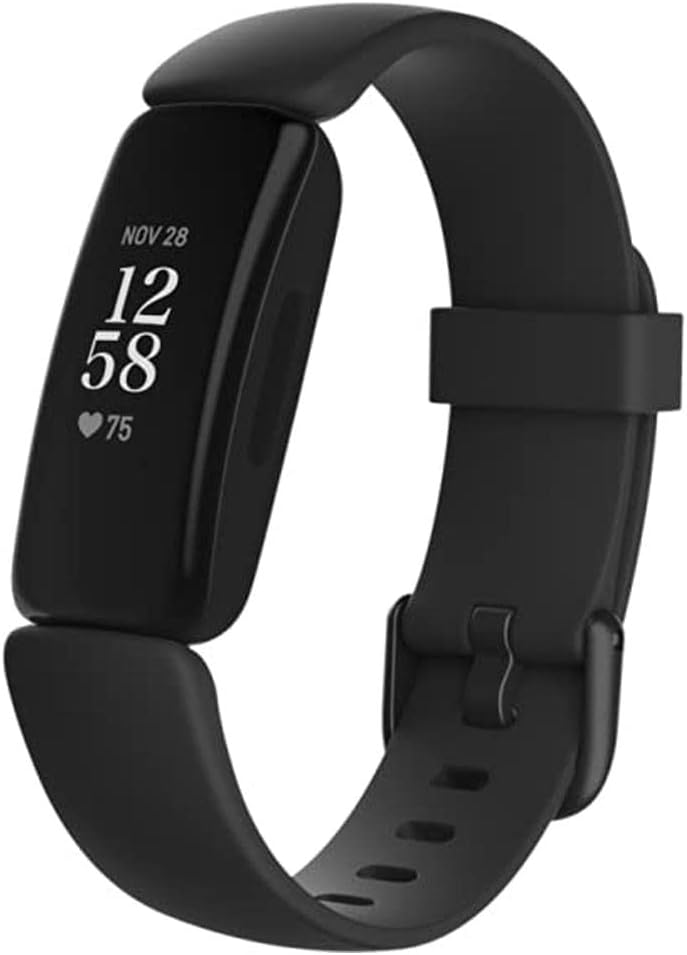
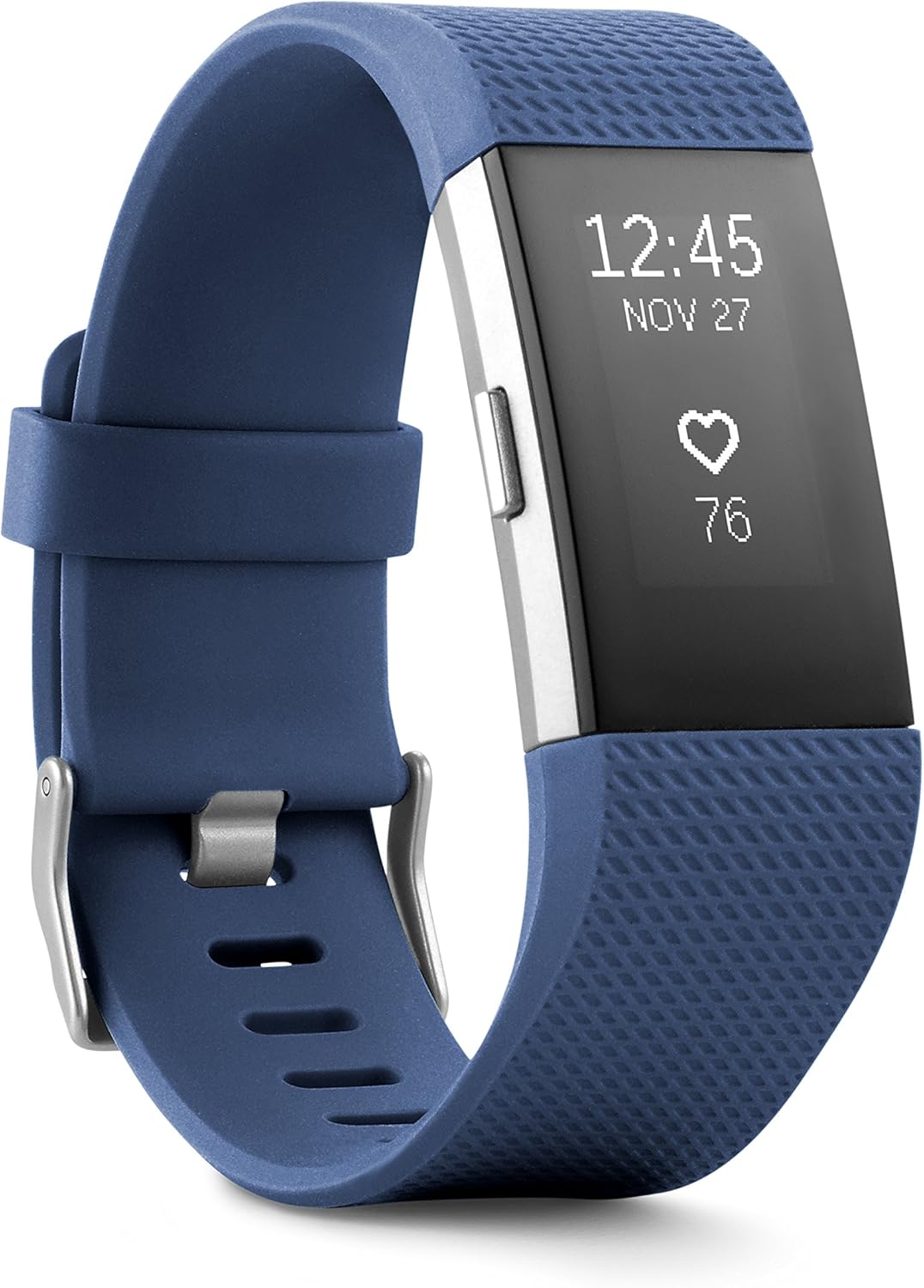
This pedometer can be an outstanding addition to any hiking, jogging, or running program It continuously displays the time (in either 12- or 24-hour systems), and monitors steps, distances (in miles or kilometers), calories consumed, and duration of activity. Depending on your performance objectives, the device can be set to continuously display the current time, and either the steps, distance, calories consumed, or activity duration for that particular day. Because it displays seconds as well as minutes and hours, this pedometer can help to monitor pulse.Adjustments in the various modes can be accomplished only when the appropriate data is displayed. For the initial set up, press the Mode button repeatedly until the screen displays the “Step” mode on the top line and the time on the bottom line. The device asks users to edit and finalize the settings for time (“12Hr” or “24Hr”), time measurement (seconds, hours, minutes, month, day, year), measurement system (inches “in,” or centimeters “cm”), stride length, weight, and daily step objective. Needless, to say, it is helpful to know the required information in advance because you have only a limited time to input the desired data for the initial set-up.To view totals in the various data fields, press the “Mode” button until the “Total Step” field appears on the top of the screen and the time appears on the bottom. Then pressing “Set” repeatedly will display the total miles, calories consumed, minutes of activity, and total steps. Apparently, these data are calculated from the time of the initial set-up. To view results for each of the previous 30 days, press the “Mode” button until the “Step” appears on top of the screen and “01” appears on the bottom. Then pressing “Reset” repeatedly will take you to a particular day, and pressing “Set” repeatedly will display the miles, calories consumed, duration of activity, and steps for that day.It is not clear what use the pedometer makes of such information as month, day, year, and daily step objective. But. obviously, determination of distance traveled and calories consumed will depend on the selected stride length. To determine stride length, it is best to walk (or run) over a measured course and note the number of steps taken. The term “mile” originated from the distance a Roman soldier could travel with 1,000 paces (i.e., 2,000 steps). So a Roman soldier could establish his stride length by dividing 63,360 (the number of inches in a mile) by 2,000 steps, thus discovering that his stride length was roughly 32 inches. For those of less classical inclinations, it may be simpler to walk a quarter mile, and divide the number of inches in a quarter mile (15,840”) by the number of steps required to cover this distance. If this takes 800 steps, the average step distance is approximately 20 inches. The calculation of calories consumed is derived from weight and the number of steps taken—but, needless to say, a long step up a steep hill will consume more calories than a short downhill step. And the calorie consumption does not take account of the length of steps and various other factors.Textual indication of the data displayed is provided in tiny letters across the top of the screen—these are almost invisible except under optimal illumination. Users can clip the pedometer to a belt or pocket, or suspend it from a neck strap. I prefer instead to thread a shoestring through the pedometer, permitting the pedometer to hang from my belt, which enables me to check time and distance by a simple upward flip of the device, while ensuring that it cannot be dropped.